
The ProAltus Guide to Fall Protection
Working at height remains one of the leading causes of injury and fatality on UK construction and maintenance sites. But the question of whether fall protection is needed doesn’t start with harnesses and anchors — it starts much earlier.
The best form of fall protection is often not working at height at all. That’s why the law asks duty holders to first consider whether the task can be done from the ground. If that’s not possible, then planning, prevention, and protection come into play.
This guide explains what fall protection really means, when it applies, and how to ensure what’s in place actually works — not just in theory, but on your project.

The Hierarchy of Control for Work at Height
Before specifying any fall protection system, it’s essential to understand the Hierarchy of Control — a framework set out in the UK’s Work at Height Regulations.
The steps are:
Avoid working at height altogether if you can.
Prevent falls by using guardrails, edge protection, or fall restraint.
Minimise the consequences of a fall using arrest systems.
Mitigate remaining risks with PPE, supervision and planning.
The higher up the hierarchy, the safer the outcome. Good design starts at the top and works downward — not the other way around.
Choosing to use a harness isn’t a solution by itself. It’s a last line of defence when other options have been ruled out.

Fall Protection, Fall Arrest or Fall Restraint?
It’s easy to confuse these terms, but they describe very different ideas.
Fall protection is the overall strategy for managing height risk. It includes everything from guardrails to lifelines to signage.
Fall arrest refers to systems that catch someone mid-fall, like a harness and lanyard attached to an anchor point.
Fall restraint, often the safest option, physically prevents the user from reaching a fall-risk position in the first place.
Restraint avoids the fall. Arrest stops it after it’s already happening. The right solution depends on your environment, your task, and how people actually work on site.
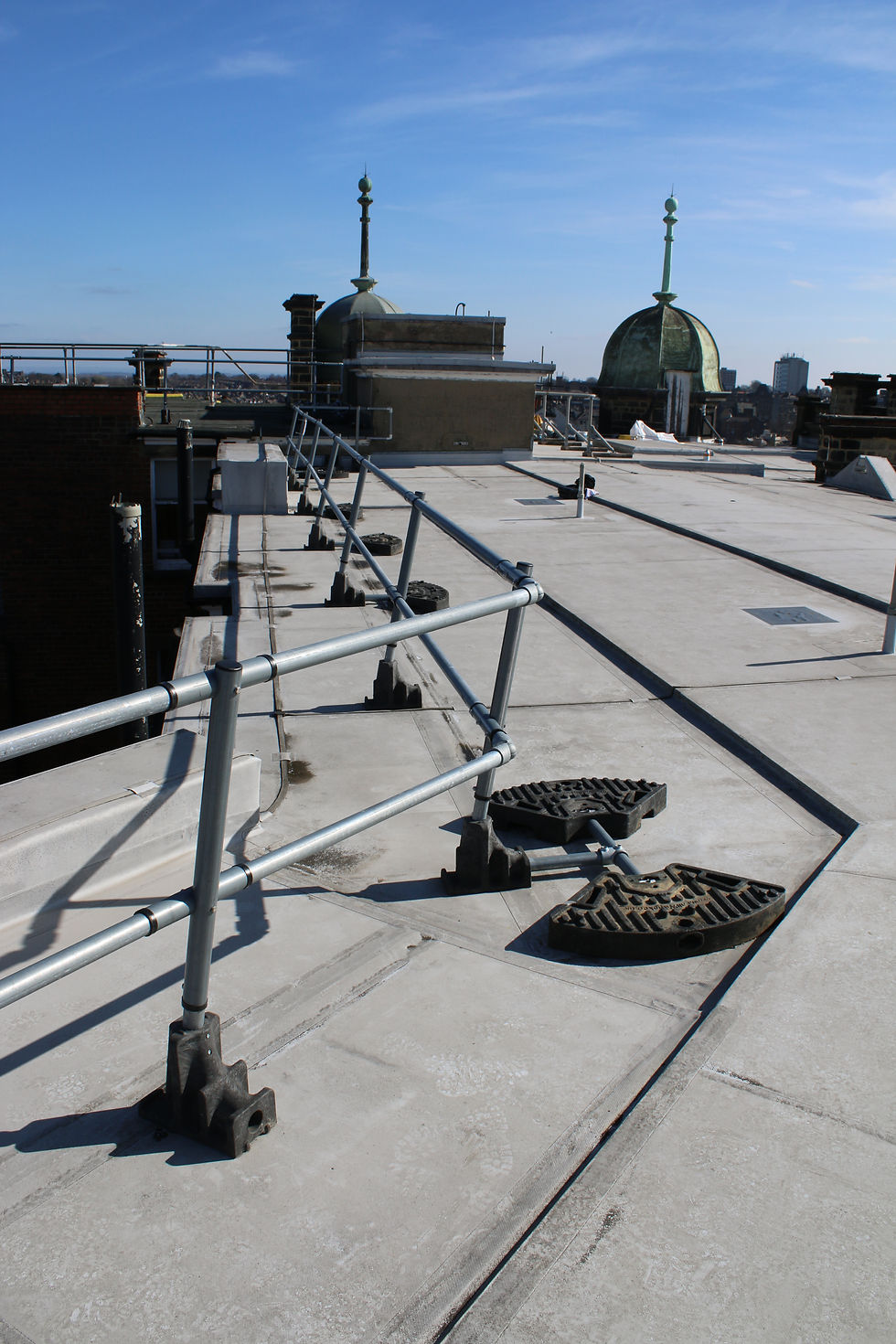
Fall Protection Equipment
A fall protection system isn’t one product — it’s a combination of elements that work together. Depending on the setting, you might use:
Permanent or temporary anchor points fixed to structure or steelwork
Eyebolts for rope access, restraint, or fall arrest
Horizontal or vertical lifelines that allow travel across façades or roof surfaces
Guardrails, handrails, and barriers to stop unintentional edge exposure
Harnesses, lanyards, and connectors selected and used according to task
Inspection tags, load tests, and certification documents for accountability and traceability
Getting the right kit is only half the battle. Knowing how it interacts — and how it’s maintained — is what makes a system safe.

When Is Fall Protection Required in the UK?
The Work at Height Regulations 2005 require fall protection whenever there’s a foreseeable risk of a fall that could cause injury. This doesn’t just mean high roofs — it includes:
Low-level drops and internal voids
Plant decks, parapets and rooflights
Access via risers, hatches or fixed ladders
Temporary work on façades or cladding
If a fall risk exists and can’t be eliminated, then protection must be designed in. That includes both permanent and temporary systems.
Regulators don’t just look at what’s installed — they ask whether it fits the risk. A fall protection system has to make sense for the space and the job.

Key Standards to Know
To be compliant in the UK, fall protection systems must be designed, installed, and maintained to recognised standards:
BS EN 795 – Covers performance requirements for anchor devices used for fall protection
BS 7883 – Offers best practice for the design, testing, installation, inspection, and record-keeping of fall protection systems
BS EN 365 – General requirements for instructions, marking and documentation of PPE against falls from height
BS EN 353-1 / 353-2 – Standards for guided type fall arresters including rigid and flexible systems
BS EN 363 – Basic definitions and system requirements for personal fall protection systems
BS EN 361 – Specifies the requirements for full body harnesses
BS EN 362 – Specifies the requirements for connectors such as hooks and karabiners
BS 8437 – Code of practice for the selection, use and maintenance of personal fall protection equipment and systems
HSE INDG401 – HSE leaflet on the essentials of safe work at height
Other standards may apply depending on the application (e.g. rope access, building type, or temporary systems).
Compliance isn’t just paperwork — it’s about whether your system will perform when it’s needed most.

Why Every Project Needs a Tailored System
No two buildings are the same — and neither are their risks. Even similar properties may have different access needs depending on layout, use, or occupancy.
That’s why fall protection can’t be copied and pasted from one job to another. Your system needs to reflect:
The specific access tasks required
The movement routes across roofs or façades
How frequently maintenance is needed
Whether systems must be discreet, weatherproof, or temporary
A tailored system is not about complexity — it’s about fit-for-purpose protection that keeps people safe without disrupting operations.

Common Mistakes and How to Avoid Them
Even well-intentioned fall protection can fail if it’s poorly planned or used. Common issues include:
Installing equipment without real access planning
Choosing systems that don't suit the building or task
Neglecting regular inspection or certification
Over-relying on PPE without rescue or fall clearance planning
A system that ticks the compliance box but doesn't work in practice isn't safe. That’s why early planning and the right technical input are so important.

Need support with your latest project?
Fall protection isn’t just a product — it’s a process. Getting it right means understanding the site, the risk, and the real-world demands of the work being done.
We design and deliver fall protection systems that are tailored to your environment, your people, and your legal duties. From anchor systems and lifelines to inspection schedules and certification, we provide expert support across the full lifecycle.
Whether you're planning a new build, maintaining a live site, or retrofitting in a sensitive environment, speak to our team about what’s right for your project — and how to make it work long-term.


